

| Stadium Name: | Ewood Park |
| Year Opened: | 1882 |
| Capacity: | 31,367 |

History of the stadium
Ewood Park has remained the home stadium of Blackburn Rovers since 1890 when the club finished their wandering days. It is now one of the largest grounds in the EFL Championship.
Sporting meetings had already occurred at Ewood Park before Blackburn Rovers moved into the stadium. The doors to the famous old venue first swung open in 1882 and Rovers played a few games there. Four local entrepreneurs created the ground and called it, Ewood Bridge.
The venue was originally a multi-sport facility which held football games, as well as athletics events, dog racing and trotting. But Blackburn agreed to a 10-year lease contract to become the sole tenant in 1890. They paid £60 annually for the first five years, then £70 afterwards.
Blackburn Rovers adopted Ewood Park as their stadium in 1890
Blackburn Rovers adopted Ewood Park as their home stadium in 1890 having decided to find an alternative ground. The landlord of their previous Leamington Street ground tempted the relocation after increasing the club’s rent. Rovers believed they demanded an exorbitant fee.
Club chiefs scoured the town to find a suitable venue before deciding to return to what was then Ewood Bridge. Blackburn held a handful of games at the venue in their formative years. They had also played at Oozehead, the Pleasington Cricket Ground and Alexandra Meadows.
Only Leamington Street was a substantial home for Blackburn Rovers, though, having spent nine years at the stadium. The Lancashire outfit also won the FA Cup four times during their time at the ground. Rovers even moved into Ewood Park on the back of securing the trophy.
Blackburn Rovers bought the freehold to Ewood Park in the 1890s
Another FA Cup title even followed in their first season at Ewood Park as Blackburn Rovers’ trophy cabinet grew rapidly. But the change of venue began to take its toll as costs reached £2,700 by 1983/84. Blackburn also invested a further £2,500 to buy the stadium’s freehold.
Now as the stadium’s owner, Blackburn spent heavily again to add a roof to the Darwen End stand in 1903. Rovers also erected the Nuttall Street stand the following year. But the arrival of textile baron Laurence Cotton as the club’s new chairman in 1905 sparked major changes.
Construction on a new two-tier main stand began in 1906 with room for 9,320 standing in a lower paddock and 4,112 seated upstairs. Blackburn employed renowned Scottish architect Archibald Leitch to design the new stand. He also designed the River Darwen stand in 1913.
Division One titles in 1911/12 and 1913/14 helped finance the construction of their River Darwen stand. But Blackburn made few further modifications to their stadium before 1960 as Rovers erected a new cantilevered concrete roof above the Blackburn End stand at Ewood Park.
Jack Walker made Ewood Park the stadium it is today in the 1990s
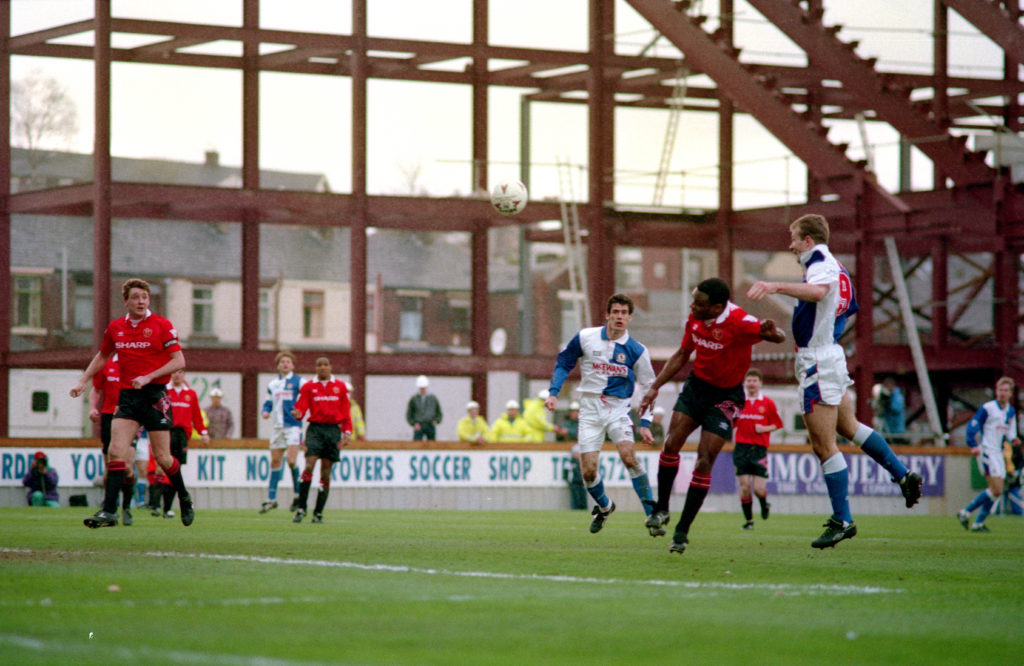
The Lancashire outfit enjoying a more prosperous period on the pitch in the late 1980s saw builders return, though. Blackburn erected the Walkersteel Stand on the River Darwen side to address Ewood Park falling into a state of decay. Yet more drastic changes were soon to arrive.
Jack Walker followed in Cotton’s footsteps when he became the owner of Blackburn Rovers in 1991. The boyhood Blackburn fan hired architects Atherden and Fuller to create a new all-seated ground. Rovers would then build three new two-tier stands between 1992 and 1994.
The new structures resided at the Blackburn and Darwen Ends plus the Nuttall Street stand, now named after Walker. While Rovers thrashed Nottingham Forest 7-0 in November 1995 to open the new Ewood Park. It is also the second-biggest win in Blackburn Rovers’ history yet.
How to get to Ewood Park
Fans can get to Ewood Park via a variety of methods given the location of Blackburn Rovers’ stadium in the south of the town. It is easily accessible by private vehicles, with the ground situated just off the A666. Fans arriving from the south should leave the M65 at Junction 4.
Blackburn Rovers offer parking at their stadium for any supporters travelling to Ewood Park by private vehicles. Car parks are located at the Blackburn End and the Darwen End and can either be pre-booked per game or seasonally. Fans can also pay for parking on the day, too.
The nearest train stations to Ewood Park are Blackburn station, which is around one and a half miles from Rovers’ stadium, and Mill Hill station, which is around one mile away. While bus routes, R1 and R24, each serve Ewood Park and run on average once every 10 minutes.
Stadium tour information

Blackburn Rovers run tours of their home stadium with fans able to see behind the scenes at Ewood Park. Guests attending tours of the famous old ground learn about Blackburn Rovers’ history as a club. Fans also access the dressing rooms and can pass down the players’ tunnel.
Further parts accessible with tours of Ewood Park include access to the historic oak-panelled boardroom at Blackburn’s stadium. Rovers also take guests attending a tour to the corporate areas and the media suite. While tours generally begin at 11:00 from the Jack Walker Statue.
All standard tours can accommodate a maximum of 30 people and last for approximately 90 minutes. Aspects of the tours of Blackburn Rovers’ stadium may also be subject to changes.
| Prices: | Ewood Park stadium tours |
| Adults: | £12 |
| Concessions (over-65s): | £7 |
| Juniors (4-17 year olds): | £7 |
| Juniors (3 and under): | Free |
| Personal assistants: | Free |
Address:
Blackburn Rovers: Ewood Park, Blackburn, Lancashire, England, BB2 4JF